


Visioning Task Force shares path forward during annual conference
By UNY Communications | Email

On Thursday, May 28, 2026, during the Upper New York Annual Conference, conference leaders and members of the Visioning Task Force presented a comprehensive Strategic Missional Path Forward focused on helping the conference navigate realities while embracing new opportunities for ministry and mission.
Naming the reality Robyn Vernon, Site Director at Skye Farm Camp & Retreat Center, opened the presentation by grounding the body in the current realities facing the conference. She shared data reflecting significant changes over the past decade, including a decline in the number of churches, clergy, worship attendance, faith formation participation, and overall financial capacity. Statistics also highlighted the increasing number of churches with smaller average worship attendance, as well as the growing strain on congregations balancing ministry with aging buildings, limited resources, and reduced staffing. Despite the realities presented, Vernon emphasized that the purpose of reviewing the data was not to discourage the body, but to help the conference clearly understand its current context. The Visioning Task Force acknowledged that ministry across Upper New York no longer looked the same as it did ten years ago, while affirming that the conference had been given an opportunity to faithfully create a new path forward together.
Listening to United Methodists of Upper New York

The Rev. Jongdeok (JD) Park, pastor at First United Methodist Church of Oswego, continued the presentation by reflecting on the work that began following the 2025 Annual Conference session, when the body affirmed entering a season of visioning for the future of Upper New York. A task force was formed to work alongside consultant Mike Bonem and partners from AE Sloan Leadership, Daniel White, and Tod Bolsinger. Throughout the year, the group engaged in extensive listening sessions through surveys, focus groups, and Bishop Héctor A. Burgos-Núñez's C3 Tour conversations.
Rev. Park also introduced the members of the Visioning Task Force:
Rev. Teressa Sivers
Tara Barnes
Dr. Scott Johnson
Rev. Matthew French
Rev. Casey Bradley
Jessica White
Rev. Jongdeok (JD) Park
Rev. Drew Sperry
Rev. Richelle Goff
Robyn Vernon
Valerie Clark
Rev. Dr. Aaron Bouwens
Bishop Héctor A. Burgos-Núñez

Tara Barnes, Lay Leader of the Binghamton District, shared several themes that emerged during the listening process. Participants celebrated the resilience of clergy and laity, the strong sense of connection experienced during conference gatherings, the value of mission and disaster response ministries, and the diversity present throughout Upper New York. Many also expressed appreciation for a renewed sense of openness, collaboration, and grace within the current episcopal leadership. At the same time, Barnes acknowledged that challenges surfaced during the listening process. Leaders spoke about lingering hurt and mistrust from previous experiences, exhaustion among clergy and congregational leaders, financial strain, aging facilities, and concerns about sustainability. Participants also voiced a strong desire for clearer communication, greater transparency, and consistent follow-through from conference leadership.
Throughout the presentation, annual conference members participated in guided table conversations, discussing how the realities and themes shared reflected their own ministry experiences. Reflections from each table were collected through QR codes and links provided through the UNY UMC App. Courageous Missional Connection
The Rev. Richelle Goff, District Superintendent of the Genesee Valley and Mountain View Districts, introduced what the Visioning Task Force identified as the charism, or unique Spirit-given gift, of the Upper New York Conference: Courageous Missional Connection: The Upper New York Conference possesses a Spirit-given capacity to (be) remain connected in Christ while courageously mobilizing leaders and congregations for mission among vulnerable people in our communities.
The Visioning Task Force described this charism as the conference’s ability to remain connected in Christ while courageously mobilizing congregations and leaders for mission among vulnerable people in local communities.
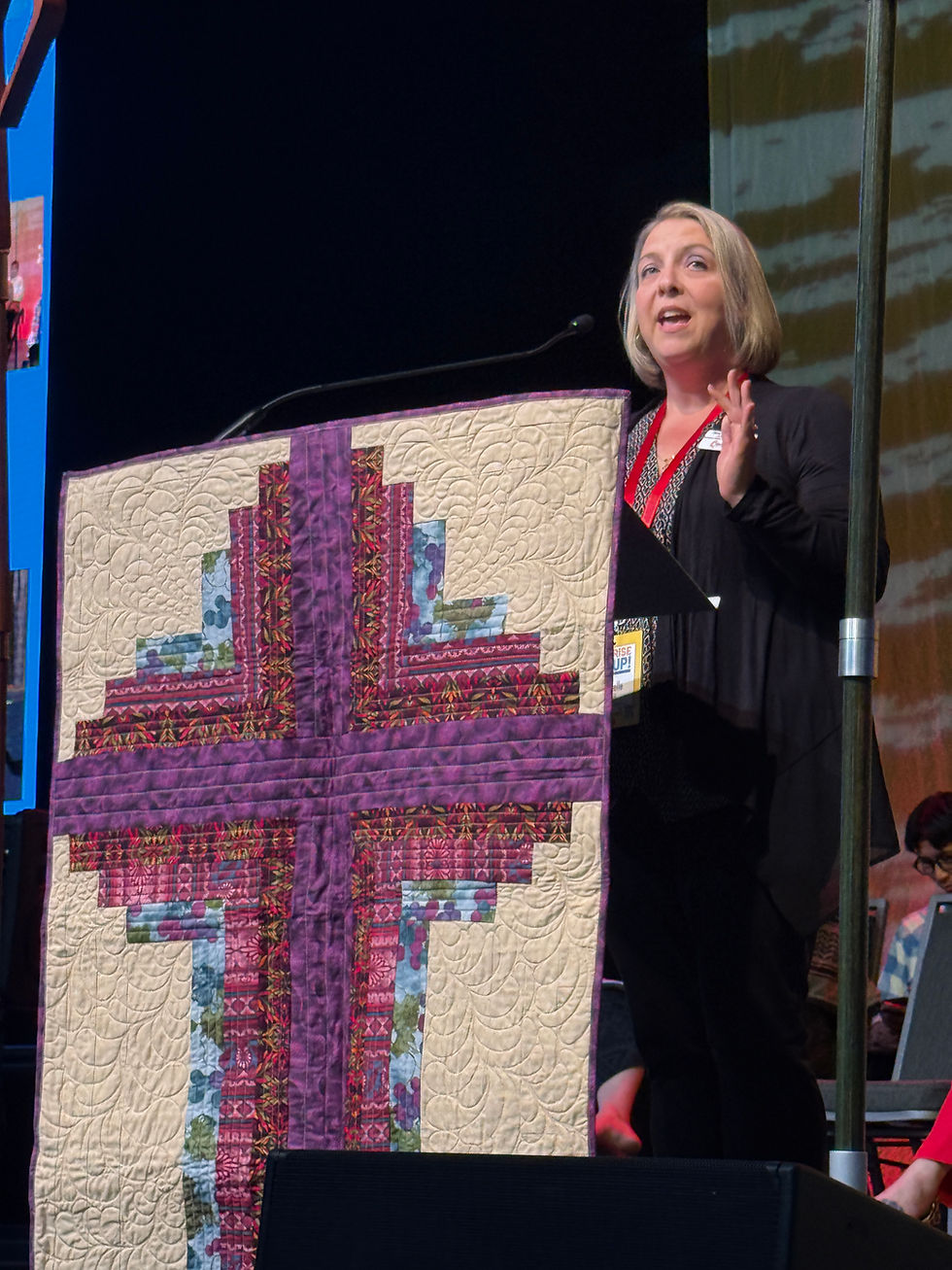
Rev. Goff explained that the charism emerged through stories and feedback gathered during the listening process and reflected the conference’s commitment to connection, justice, resilient faithfulness, and mission.
As part of the process, the task force also engaged in conversations with people outside The United Methodist Church throughout the conference area. Through interviews and community listening, two major themes emerged:
The need to support vulnerable populations, and
The growing need to rebuild community connection and belonging.
Shifting toward the future
Valerie Clark, Board of Ordained Ministry member, and the Rev. Matthew French, pastor at Springville: First UMC, continued the presentation by outlining the adaptive shifts the conference would need to embrace moving forward. They explained the difference between technical change and adaptive change, noting that adaptive challenges require learning, experimentation, and new ways of thinking.
Five adaptive shifts were identified as priorities for the future of Upper New York:
From institutional preservation to missional experimentation.
From congregational independence to connectional collaboration.
From clergy-centered leadership to shared leadership ecosystems.
From bureaucratic complexity to mission-focused systems.
From program-centered ministry to community-embedded presence.
Conference members gathered in table conversations to discuss possible experiments, barriers, and opportunities connected to these shifts.
Building new models for ministry
The Rev. Teressa Sivers, pastor at Endicott: Central UMC, and the Rev. Drew Sperry, pastor at Latham: Calvary UMC, introduced several strategic initiatives intended to help the conference embody these adaptive shifts over the coming years. These initiatives included collaborative parish development, innovative ministries and new faith communities, shared leadership models, and community mission catalysts designed to strengthen partnerships between congregations and local organizations.
The Rev. Casey Bradley, pastor at Oneonta: First UMC, later highlighted opportunities for collaboration between the Upper New York and Susquehanna Conferences, including shared leadership development, collaborative ministry initiatives, and partnerships supporting vulnerable communities. These opportunities were presented as ways both conferences could strengthen ministry impact while stewarding resources faithfully across the shared episcopal area.
Moving from vision to action
Tara Barnes and Robyn Vernon returned to the podium to outline several near-term technical changes designed to rebuild trust, reduce administrative burdens, improve communication, clarify district leadership roles, strengthen support systems for clergy and congregations, and simplify access to resources. Leaders emphasized that while adaptive changes would take years of experimentation and learning, these technical actions could begin immediately and visibly demonstrate the Conference’s commitment to transparency, consistency, and support.
A shared commitment moving forward
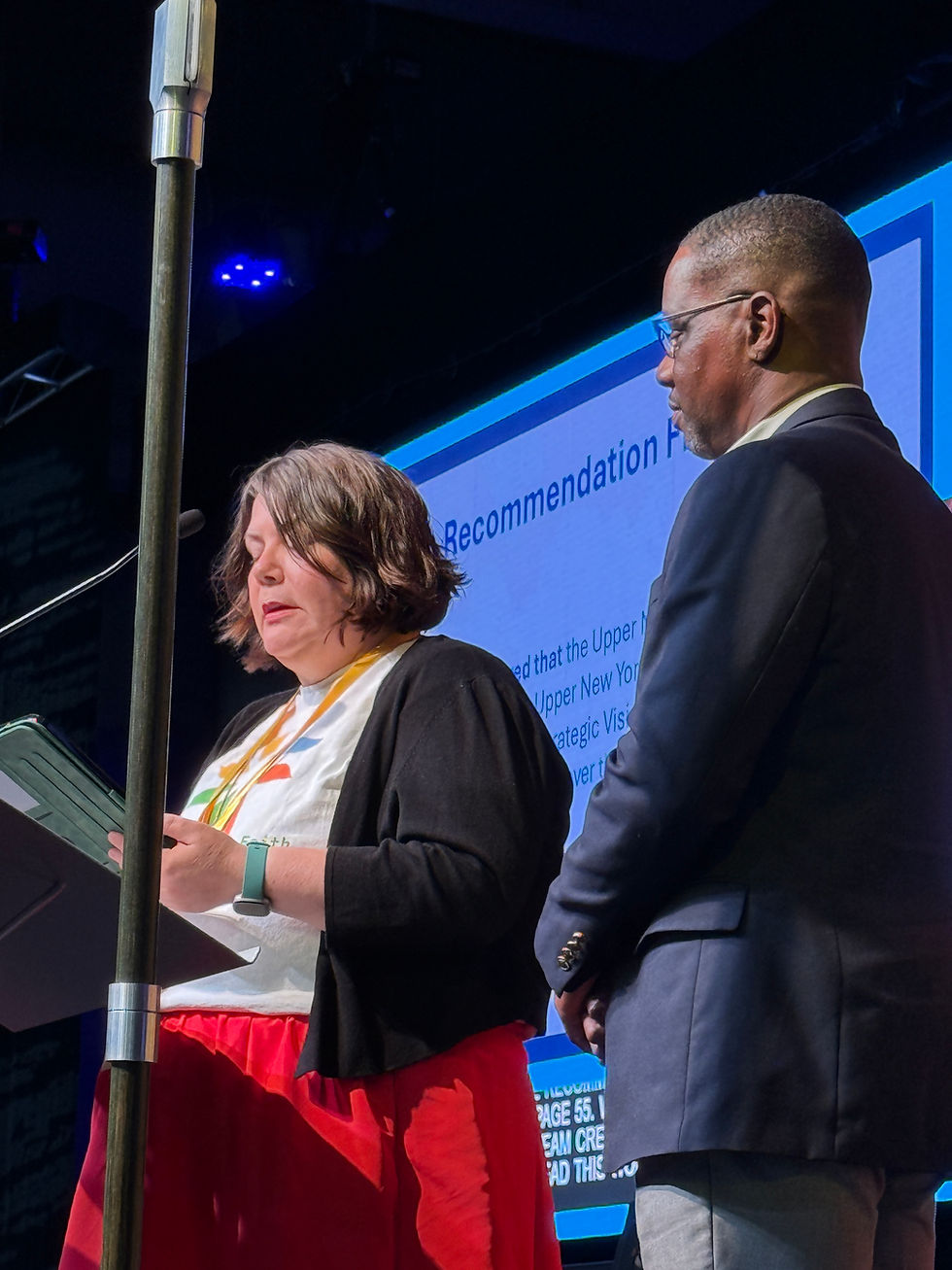
Dr. Scott Johnson, pastor at Pendleton Center UMC and Buffalo: First UMC, concluded the presentation by sharing a vision for the future in which United Methodists of Upper New York become known not for institutional structure, but for being a visible and healing presence in communities across the region.
Jessica White, Conference Lay Leader, then presented the formal recommendation affirming the Strategic Missional Path Forward document and inviting the annual conference to actively support and live into the shared vision for the future of ministry in Upper New York.


