news article
Harvesting harmony: The challenge of sharing inclusive music
January 26, 2026 / By UNY Communications and UNY AC Worship Team / .(JavaScript must be enabled to view this email address)
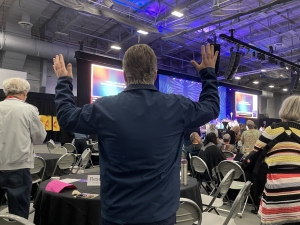 Every spring, United Methodists of Upper New York gather for Annual Conference (AC)—a time when the Church comes together to pray, worship, make decisions, and celebrate the shared work of ministry. It is a sacred rhythm that unites lay and clergy members in holy conferencing and collective song. Within those moments of worship, music does what words alone cannot—it connects hearts across generations, cultures, and languages, creating a living expression of the body of Christ. Yet even in this unity, a quiet struggle is emerging.
The Tension Between Tradition and Inclusion
Many United Methodists cherish the hymns that have shaped their faith journeys. These songs connect us to the saints who have gone before, to camp meetings and revivals, to moments of baptism and calling. These very hymns and songs of worship offer moments of nostalgia. As The United Methodist Church continues to affirm its belief that all people are made in God’s image, we are increasingly aware that some beloved lyrics do not speak to that expansive vision.
Language that once seemed customary—gendered terms like “He,” “Father,” or “mankind”—can now feel limiting, especially for those who have long been excluded from traditional representations of God or humanity. Phrases such as “marching as to war” or “conquering” may be disturbing to those affected by militaristic or colonial imagery. Even when sung with love by some, these words can unintentionally distress and unsettle others.
Inclusive worship seeks to offer language that is as wide and welcoming as God’s grace itself. But when large gatherings rely on shared printed or projected lyrics, inclusive intent quickly collides with practical and legal barriers.
Copyright and the Limits of Change
One of the most difficult realities facing worship planners is that copyright law does not allow for lyric alterations without permission from the rights holder. While many local churches quietly adapt or substitute words for inclusivity, those changes cannot legally be projected, printed, or livestreamed in a public setting under standard Christian Copyright Licensing International (CCLI) or OneLicense agreements. This presents a real struggle for any worship team as it leaves members torn between respecting copyright and creating worship that welcomes everyone.
This means that even when worship leaders wish to revise gendered language or remove harmful metaphors, they are often bound to use the words as published. For large-scale events like the Upper New York Conference Annual Conference session, where hundreds of participants rely on screens or printed worship booklets, this limitation is even more pronounced. The result is a painful bind of honoring both the legal rights of songwriters and the moral call to ensure every person feels welcome in the language of worship.
Navigating the Challenge
As planning for the 2026 Upper New York Annual Conference is underway, the worship team is navigating this challenge by making careful song selections and choosing songs and hymns already written using inclusive language. This may mean finding a balance that includes traditional favorites and newer, more inclusive pieces. You may also notice some creative alternatives like using instrumental renditions, poetry, or responsive readings when lyrics are problematic.
We understand that change is often difficult and changes in worship can be emotional. That is why we are calling for grace as we work together to provide a more inclusive expression of faith through music. This is not about erasing tradition. These changes are about expanding the circle of belonging.
A Call for Grace and Growth
As The United Methodist Church continues its journey toward greater inclusivity, the challenge of balancing copyright integrity, theological conviction, and pastoral care remains. Yet in that very tension, there is opportunity—a chance to model the grace, creativity, and courage that have always characterized our faith.
In the end, inclusive worship is not only about words; it is about love and expanding the circle so that all God’s children can see themselves reflected in songs of faith. When the Church sings with love at its center, every voice can truly find a home in the song.